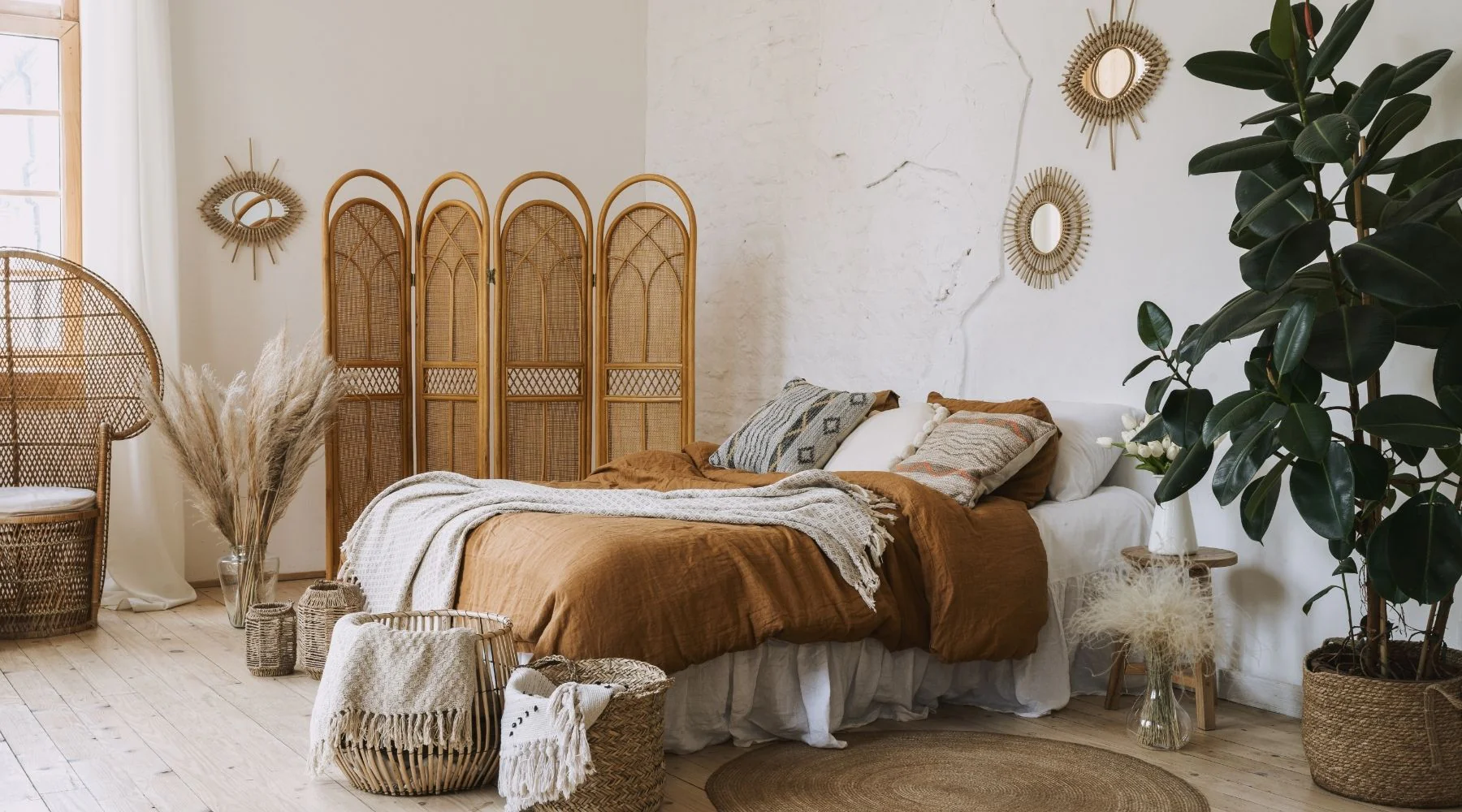
The Bohemian design style, often just called boho, feels like a warm hug from a well-traveled friend who doesn’t care about matching furniture. It’s all about freedom, creativity, and letting your personality spill out into every corner of your home. Think layered rugs from different markets, plants everywhere, and colors that clash in the best possible way. I’ve always loved how boho turns a plain room into a story—your story.
I remember the first time I tried to go full boho in my old apartment. I dragged home a vintage Moroccan rug from a flea market, hung some thrifted tapestries, and added way too many throw pillows. It looked chaotic at first, but once I stepped back, it felt alive. Like the space was breathing. That’s the magic of bohemian style: it rejects perfection and celebrates imperfection.
What Is Bohemian Design Style?
Bohemian design draws from a free-spirited lifestyle that says rules are optional. It mixes global influences, natural elements, and personal treasures into a cozy, eclectic haven. No two boho spaces look exactly alike because they’re built around what makes you happy.
This style prioritizes comfort over convention. You might find rattan chairs next to velvet cushions and houseplants climbing every surface. It’s relaxed, inviting, and full of good vibes.
The History of Bohemian Style
The roots go back to 19th-century Paris, where artists, writers, and musicians lived outside societal norms. The term “bohemian” came from a French label for Romani people, mistakenly thought to hail from Bohemia in the Czech Republic. These nomads and creatives embraced unconventional living.
By the 1960s and 70s, the hippie movement revived it big time. People rejected consumerism for handmade items, travel souvenirs, and nature-inspired decor. Today, boho evolves into modern takes—think boho chic with cleaner lines but the same soul.
I once chatted with an older artist friend who grew up in that era. She described her first apartment as “a tent inside four walls,” full of Indian fabrics and Moroccan lanterns. That spirit still defines boho: wanderlust in home form.
Key Characteristics of Bohemian Interior Design
Boho thrives on layers and texture. You’ll see mismatched patterns, rich colors, and organic materials everywhere.
Walls often stay neutral or warm to let accessories shine. Furniture leans low and comfy—think floor cushions, poufs, and vintage pieces.
Plants are non-negotiable. Greenery softens edges and brings the outdoors in.
Global touches like kilim rugs, macramé hangings, and ethnic prints add personality.
Lighting is soft and ambient—string lights, lanterns, and floor lamps create cozy glows.
Core Elements of Boho Decor
Let’s break down the must-haves that make a space feel truly bohemian.
Textiles and Fabrics — Layer everything: fringed throws, embroidered pillows, and patterned curtains. Mix velvet, cotton, wool, and jute for depth.
Patterns and Prints — Bold ikats, florals, geometrics, and tribal motifs clash happily. No need to coordinate perfectly.
Natural Materials — Rattan, wicker, wood, jute, and terracotta ground the look in earthiness.
Color Palette — Earth tones like terracotta, olive, rust, and sand mix with vibrant pops of mustard, teal, or pink. In 2025-2026 trends, earthy neutrals dominate with metallic accents like brass.
Furniture — Low-slung sofas, carved wood pieces, and multifunctional items like poufs that double as seats or tables.
Accessories — Dreamcatchers, wall hangings, candles, books, and travel mementos tell your story.
How to Achieve Bohemian Style in Different Rooms
Start small if you’re new. Pick one room and build layers gradually.
In the living room, anchor with a large patterned rug, add a low coffee table, layer seating with floor cushions, and hang plants or macramé.
For the bedroom, go for a canopy bed draped in sheer fabrics, piled-high bedding in mixed prints, and bedside lanterns.
Kitchen boho means open shelving with colorful ceramics, hanging herbs, and woven baskets.
Bathrooms get spa-like with plants, rattan mirrors, and textured towels.
I turned my tiny balcony into a boho retreat with string lights, a hammock chair, and potted succulents. Evenings there feel like mini-vacations.
Pros and Cons of Bohemian Design
Pros
- Highly personal and expressive
- Budget-friendly with thrift finds and DIY
- Cozy and welcoming for gatherings
- Timeless with evolving trends
- Easy to update seasonally
Cons
- Can feel cluttered if not balanced
- Hard to keep tidy with so many layers
- Overdoing patterns risks chaos
- Not ideal for minimalist lovers
- Sourcing unique pieces takes time
Bohemian vs. Similar Styles: A Quick Comparison
People mix up boho with eclectic or boho chic, but differences exist.
| Aspect | Bohemian (Boho) | Eclectic | Boho Chic |
|---|---|---|---|
| Vibe | Free-spirited, nomadic, layered | Intentional mix of eras/styles | Polished, modern boho |
| Colors | Bold, earthy with vibrant pops | Often neutral base | Muted tones, sophisticated |
| Furniture | Vintage, handmade, low | Vintage/antique, balanced | Sleek lines with boho elements |
| Clutter Level | High (intentional layers) | Moderate | Lower, curated |
| Focus | Personality and comfort | Harmony in diversity | Glam + relaxed |
Eclectic feels more “grown-up” and controlled, while boho chic tones down the wildness for elegance.
Where to Shop for Bohemian Decor
Thrift stores and flea markets yield the best treasures—unique rugs, vintage lamps, or quirky art.
Online spots like Etsy for handmade macramé, World Market for global imports, or IKEA for affordable rattan pieces.
For 2025-2026 trends, look for textured items like tufted pillows or metallic accents on sites like Antique Farmhouse or Amazon.
Budget tip: Start with one statement piece, like a kilim rug, then build around it.
People Also Ask (PAA)
What is bohemian style in interior design? It’s an eclectic, free-spirited approach mixing patterns, textures, global influences, and natural elements for a cozy, personalized space.
Is bohemian style outdated? Not at all—it’s evolving. Modern boho in 2025-2026 blends earthy tones, metals, and cleaner lines while keeping the soulful vibe.
How do I start with boho decor? Begin with neutrals on walls, add a bold rug, layer textiles, incorporate plants, and collect meaningful accessories over time.
What’s the difference between boho and hippie style? Hippie leans heavier on 60s/70s vibes like tie-dye and peace signs; boho is broader, more global and timeless.
Can bohemian style work in small spaces? Yes—use vertical space for plants, multifunctional furniture like poufs, and light fabrics to avoid overwhelming the room.
FAQ
Is bohemian design expensive? No, it’s one of the most affordable styles. Thrift, DIY, and secondhand pieces keep costs low while adding character.
How do I avoid making my boho room look messy? Stick to a loose color story (like warm earth tones), edit ruthlessly—keep only what sparks joy—and balance busy areas with calm spots.
What plants work best in bohemian interiors? Trailing ones like pothos or string of pearls, fiddle leaf figs, snake plants, and succulents add that lush, lived-in feel.
Can I mix boho with modern elements? Absolutely—that’s modern boho. Pair sleek black accents or minimalist furniture with boho textiles for contrast.
How do I incorporate boho without committing fully? Start small: add a patterned throw, some plants, or a wall hanging. These pieces bring boho energy without a full overhaul.
Bohemian style isn’t about following trends—it’s about creating a home that feels like you. Whether you’re layering vibrant kilims or keeping it subtle with earthy textures, the goal is joy and comfort. If a space makes you smile when you walk in, you’re doing it right. Go ahead, mix that floral pillow with the tribal rug. Your home should tell your story, not someone else’s.